
Insights

Your Law Firm’s Content’s Real Job? Validating Referrals. Here’s Why It Matters.
January 05, 2026
For most law firms, the goal of online content is to drive business development and demonstrate experience. And yes, those things matter. But when firms focus only on lead generation metrics or keyword rankings, they miss the most important job their content is actually doing.Your content is trying to confirm a decision that’s already in motion.
In B2B legal marketing, most prospects don’t start their journey with a Google search. They start with a referral. Your website, content, and overall digital footprint is where a referral is either validated or quietly abandoned.
The Real Buyer Journey for Legal Services
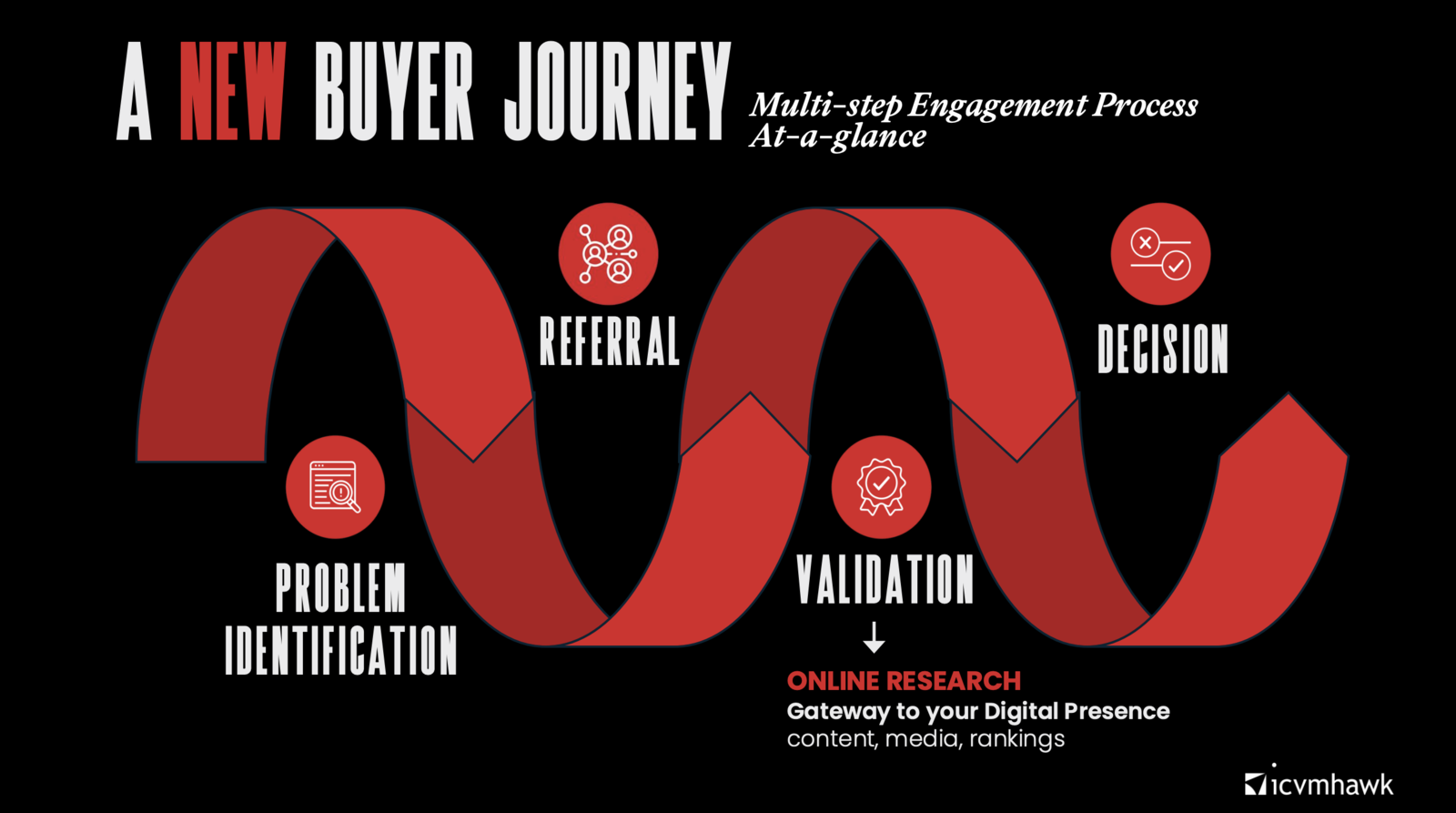
A general counsel, business owner, or individual client doesn’t often think, “I’m going to search the internet for a lawyer today.” Instead, they ask someone they trust.
- A colleague
- Another attorney
- A board member
- A friend
- A professional advisor
This is the moment many firms underestimate.
Your website is not the starting line. It’s the gateway.
Your prospect is already leaning toward you, but they’re looking for reassurance. They want to know:
- Does this firm actually do what they’re known for?
- Do they feel credible, modern, and aligned with my needs?
- Will I feel confident hiring them?
Your Law Firm’s Digital Presence Is a Validation Tool, Not a Billboard
In traditional legal marketing, websites were often treated like brochures, filled with information about the firm. Today, they need to function more like a due diligence platform.
Every practice page, attorney bio, article, and social post contributes to a silent conversation a referral is having in the background:
“Is this firm as good as the person who recommended them?”
“Does this firm or attorney appear in search results and seem credible?”
“Does this firm or attorney appear in search results and seem credible?”
This is why “good enough” content is often not good enough anymore.
If your content is thin, outdated, generic, or inconsistent, it fails to convert, to appear in search, and it undermines trust.
And when trust erodes, referrals stall. Calls don’t get made. Emails don’t get sent.
This is especially true in high-stakes legal matters, where risk, cost, and reputation are on the line.
Content Builds the Trust a Legal Referral Initiates
Legal is, at its core, a relationship business.
Even in sophisticated B2B practices, the decision to hire a firm is deeply personal. Clients are choosing people they believe will protect them, advocate for them, and guide them through complex or stressful situations.
That’s why your content needs to do more than explain what you do. It needs to show:
- How you think
- Who you help
- What it’s like to work with you
This happens through:
- Clear, substantive practice area pages
- Attorney bios that go beyond résumés
- Thought leadership that demonstrates judgment, not just knowledge
- Messaging that reflects your firm’s values and approach
Why Inconsistency Is Costing You Work
One of the biggest issues we see in legal content marketing is inconsistency across digital channels.
A firm may be well-regarded offline but poorly represented online. Or they may have strong individual attorneys publishing content, but no cohesive firm-level narrative tying it together.
From a referral-validation standpoint, this creates friction.
A prospect might encounter:
- Conflicting descriptions of your services
- Disconnected practice pages
- Attorney bios written in different tones
- Blogs that don’t reflect your current focus
- Social media that feels unrelated—or nonexistent
And uncertainty is the enemy of conversion.
The Role of SEO in Content Marketing for Law Firms Has Changed
SEO and content marketing for B2B law firms are about clarity and credibility.
Search engines and increasingly, AI search platforms, are trying to answer one core question:
Is this firm a reliable authority in this area?
That determination is based on:
- Content depth and structure
- Consistency of messaging across pages
- Clear practice definitions
- Authoritativeness of attorney content
- External signals like mentions, links, and media
When it’s not, even a strong referral can lose momentum.
AI Search Is Raising the Stakes for Legal Marketing
AI search for law firms adds a new layer to this validation process.
Platforms like ChatGPT, Gemini, Perplexity, and others are increasingly used by legal buyers to:
- Research firms
- Compare options
- Summarize reputations
- Identify “best fit” providers
That means your content marketing strategy must now work for:
- Human readers (clients and prospects)
- Traditional search engines
- AI systems interpreting authority and relevance
Strategic legal marketing requires content that is:
- Structured
- Substantive
- Aligned with your firm’s real strengths
- Intentionally designed to validate trust
Shifting the Content Mindset: From Leads to Legitimacy
When firms start treating content as a referral-validation system, priorities shift.
Instead of asking:
- How many blogs did we publish?
- How much traffic did we get?
- Does our content reinforce why people refer us?
- Would a first-time visitor understand our value in five minutes?
- Do our practice pages reflect how we actually win work?
- Is our firm accurately represented across AI search platforms?
What Strong Validation Content Actually Looks Like
Effective content marketing for law firms tends to share a few traits:
- Focused practice narratives rather than catch-all descriptions
- Clear positioning around who you serve and why
- Thought leadership tied to real client issues, not generic trends
- Attorney bios that humanize expertise
- Consistent language across website, SEO, and AI-facing content
Conclusion
Referrals may open the door, but your content helps decide whether someone walks through it.
Every article, bio, practice page, and search result is quietly answering the same question:
Shifting your approach to legal marketing, content marketing, SEO for law firms, and AI search from attraction to validation changes everything. It rewards clarity. And it ensures that when someone does what most clients do - check you out online after a trusted recommendation - they find exactly what they were hoping to see.“Can I trust this firm with what matters to me?”
So ask yourself:
When your next best referral vets your firm online, is your content confirming the decision or creating doubt?
Because that may be the difference between being recommended and being retained.
Need help understanding how your law firm’s brand is perceived online and how to create a strategic SEO and AI-search optimized content? ICVM Hawk partners with law firms to create and develop online visibility plans, including SEO, AI Optimization, and content marketing creation. Contact us to learn more.